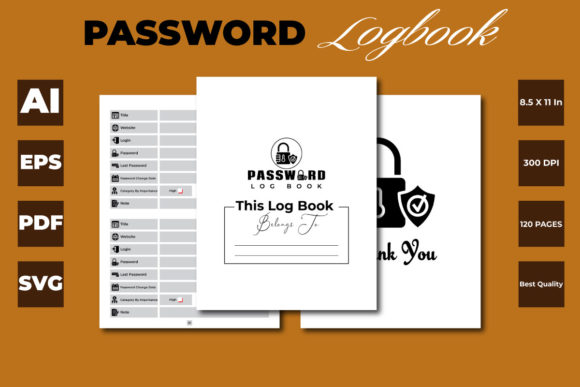
Elevating Low-Content Publishing: The Strategic Value of a Premium KDP Interior for Password Log Book
In the evolving landscape of self-publishing, the distinction between amateur and professional outputs has never been more critical. For entrepreneurs, freelancers, and digital creators operating within the Amazon Kindle Direct Publishing (KDP) ecosystem, success is no longer defined solely by niche selection but by the tangible quality of the product delivered to the consumer. This shift is particularly evident in the low-content book category, where utility meets design. Among these functional publications, the KDP Interior for Password Log Book stands out as a prime example of how specific, high-quality assets can bridge the gap between digital convenience and physical necessity.
As we navigate an era of increasing cybersecurity awareness and digital fatigue, the demand for analog organization tools has surged. However, modern consumers are discerning. They are not merely looking for blank lines; they are seeking structured, aesthetically pleasing, and professionally formatted interiors that enhance the user experience. Understanding the technical specifications, market relevance, and creative potential of a dedicated password log interior is essential for any publisher aiming to build a sustainable brand in this competitive sector.
The Intersection of Digital Security and Analog Organization
To understand why a specialized KDP Interior for Password Log Book is gaining traction among professionals and enthusiasts alike, one must first recognize the broader consumer trend toward hybrid security management. While password managers and biometric authentication dominate the tech space, a significant demographic continues to value physical backups. This includes older generations less comfortable with cloud storage, privacy advocates who prefer air-gapped records, and individuals seeking a tangible sense of control over their digital identities.
This changing need has transformed the password log from a simple notebook into a specialized organizational tool. Publishers utilizing high-quality interiors are responding to this shift by providing layouts that go beyond basic data entry. A well-designed interior anticipates the user's workflow, offering designated spaces for usernames, passwords, security questions, two-factor authentication notes, and even website-specific instructions. By integrating these functional elements into a cohesive design, publishers validate the user’s preference for physical logging while meeting modern standards of usability.
Technical Precision as a Competitive Advantage
In the low-content publishing industry, technical accuracy is the foundation of customer satisfaction. Nothing erodes trust faster than a book that prints poorly or fails to meet platform guidelines. This is where the specific attributes of a professional KDP Interior for Password Log Book become paramount. The asset described here adheres to strict production standards that directly influence the final product's perceived value.
- Optimized Dimensions and Bleed: The 8.5×11 inch format provides ample writing space, which is crucial for users with larger handwriting or those who need to record complex alphanumeric strings. Crucially, the "No Bleed" setting ensures that all content remains safely within the printable margins, eliminating the risk of text being trimmed during the binding process. This specification is vital for maintaining a clean, professional appearance on every page.
- Page Count Efficiency: With 120 pages, this interior strikes an optimal balance between substantial utility and cost-effective printing. It offers enough capacity for hundreds of entries without making the spine too thin to display a title effectively or too thick to remain portable. This page count is strategically aligned with standard royalty thresholds, allowing publishers to maintain healthy profit margins while delivering value.
- Print-Ready File Formats: Accessibility to source files such as AI, EPS, PDF, SVG, and JPG empowers creators to customize their products. Rather than being locked into a static template, professionals can modify headers, adjust fonts, or integrate branding elements. This flexibility transforms a generic interior into a unique intellectual property, distinguishing it from the sea of duplicate listings on the marketplace.
Beyond Utility: The Role of Aesthetic Design in Functional Books
Historically, password logs were purely utilitarian. Today, they exist at the intersection of organization and lifestyle design. The inclusion of patterns, geometric shapes, and abstract designs within a KDP Interior for Password Log Book reflects a deeper understanding of consumer psychology. Users are more likely to consistently use and recommend a product that brings them joy or aligns with their personal aesthetic. This is where the concept of "functional art" becomes relevant to business strategy.
The integration of seamless patterns, vintage textiles, or colorful geometric backgrounds serves multiple purposes. Firstly, it enhances the visual appeal of the interior, making the act of recording information feel less like a chore and more like a curated ritual. Secondly, these design elements can serve practical functions; subtle background patterns can increase opacity, preventing ink bleed-through from showing on the reverse side of the page. Thirdly, they offer opportunities for cross-category marketing. An interior featuring adult coloring page elements or scrapbook paper textures appeals to the creative community, expanding the target audience beyond those strictly seeking security organization.
Adapting to Diverse Creative Workflows
For marketers and creators, the versatility of these interiors supports diverse business models. The availability of pattern bundles and digital papers allows for the creation of cohesive product lines. A publisher might release a "Vintage Botanical" series that includes a password log, a journal, and a planner, all sharing similar interior motifs. This bundling strategy increases average order value and fosters brand loyalty.
Furthermore, the high-resolution nature of these assets ensures they perform well across different mediums. The same geometric shapes or abstract patterns used in the KDP Interior for Password Log Book can be repurposed for social media graphics, Etsy digital downloads, or promotional materials. This multi-channel utility maximizes the return on investment for creative assets and streamlines the workflow for solopreneurs managing multiple revenue streams.
Meeting the Expectations of the Modern Self-Publisher
The self-publishing industry has matured significantly. Early adopters could succeed with minimal effort, but today’s market rewards specialization and quality. Professionals entering this space understand that a KDP Interior for Password Log Book is not just a file; it is a component of a larger brand strategy. The expectation is for "amazing also a creative print-ready file" that requires minimal post-processing.
This demand for readiness stems from the fast-paced nature of print-on-demand trends. Creators need assets that allow for rapid iteration and testing. When an interior comes pre-formatted with correct margins, gutter settings, and resolution, it reduces the time-to-market. This efficiency allows publishers to capitalize on seasonal trends—such as New Year organization pushes or back-to-school security refreshes—without getting bogged down in technical formatting issues.
Future-Proofing Through Quality and Compliance
Looking forward, the relevance of high-standard interiors will only increase as platforms tighten quality controls and consumers become more sophisticated. Amazon and other POD providers are increasingly prioritizing books that demonstrate professional layout and design. Utilizing verified, high-quality templates mitigates the risk of rejection or negative reviews related to formatting errors.
Moreover, as artificial intelligence begins to saturate the market with generic content, human-centric design details will become key differentiators. Thoughtfully placed icons, intuitive navigation cues, and aesthetically balanced whitespace are elements that signal human care and intentionality. A KDP Interior for Password Log Book that embodies these qualities communicates respect for the end-user, fostering positive feedback loops that drive long-term sales velocity.
Practical Implementation for Maximum Impact
For those ready to leverage these assets, strategic implementation is key. Simply uploading a file is insufficient. Success lies in how the interior is presented and positioned.
- Highlight Specific Features in Listings: Do not just list "password log." Explicitly mention the 8.5x11 size, the 120-page count, and the no-bleed safety margin. Explain how the geometric or vintage patterns enhance the user experience. Use semantic terms like "secure organizer," "analog backup," and "printable pattern" to capture relevant search intent.
- Showcase the Interior: Use Look Inside features and A+ Content to display actual spreads from the PDF. Consumers want to see the line spacing, the header design, and the background texture before purchasing. Visual proof of quality reduces purchase anxiety.
- Leverage Customization: Utilize the editable AI or EPS files to create variations. Test different cover styles paired with the same interior, or modify the interior headers to target specific niches (e.g., "Senior Internet Safety Log" vs. "Family Account Organizer").
- Maintain Brand Consistency: If using pattern bundles, ensure your cover design complements the interior aesthetic. A vintage textile interior paired with a neon cyberpunk cover creates cognitive dissonance. Cohesion between exterior and interior builds trust and reinforces brand identity.
Conclusion: Quality as the Ultimate Strategy
The KDP Interior for Password Log Book represents more than a mere template; it signifies a commitment to excellence in the low-content publishing space. As the market evolves, the winners will be those who treat these functional books with the same rigor and creativity traditionally reserved for high-content literature. By combining technical precision, aesthetic sensitivity, and strategic adaptability, publishers can create products that genuinely serve consumer needs while building resilient, profitable businesses.
Whether you are a seasoned marketer expanding your catalog or a new creator seeking a solid foundation, investing in high-quality, versatile interiors is a forward-looking decision. It aligns your work with industry best practices, satisfies the nuanced demands of modern consumers, and positions your brand for sustained growth in an increasingly competitive digital marketplace. In the world of print-on-demand, quality is not just a feature—it is the strategy itself.