Mastering KDP Publishing with Tic Tac Toe Game Vol. 14: A Comprehensive Guide to Low-Content Book Interiors
In the expansive world of self-publishing, Amazon’s Kindle Direct Publishing (KDP) has revolutionized how creators bring physical books to market without traditional gatekeepers. Among the most popular and accessible niches within this ecosystem is low-content publishing, specifically activity books like tic tac toe. The KDP Interior Tic Tac Toe Game Vol. 14 represents a specialized asset designed to streamline this process for publishers. Understanding the nuances of this specific interior template is not merely about uploading a file; it is about grasping the technical standards, market demands, and strategic advantages that define successful low-content book creation in the modern digital economy.
The Foundation of Low-Content Publishing
To fully appreciate the utility of a pre-formatted interior like Vol. 14, one must first understand the landscape of low-content publishing. Unlike high-content books such as novels or textbooks, low-content books rely on repetitive structures, prompts, or activities to provide value. Tic tac toe books fall squarely into this category, serving as travel companions, classroom tools, and cognitive exercises for various age groups.
The significance of these books lies in their accessibility. For new publishers, they offer a lower barrier to entry regarding writing and editing. However, this ease of entry creates a competitive market. Success no longer comes from simply having an idea; it comes from execution quality. This is where professional-grade interiors become essential. They bridge the gap between a hobbyist project and a commercially viable product, ensuring that the final printed book meets the rigorous quality expectations of modern consumers and platform algorithms alike.
Technical Specifications: Why Details Matter
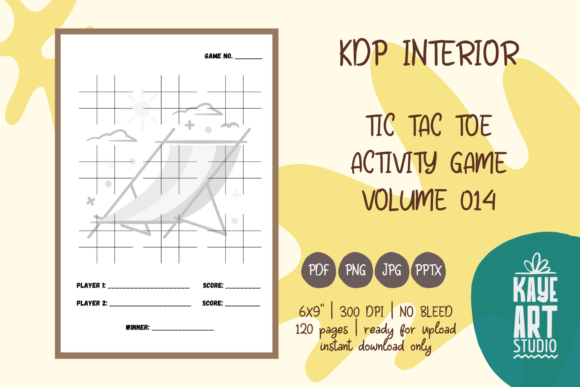
When evaluating the KDP Interiors Tic Tac Toe Game Book, the technical specifications are not arbitrary numbers; they are the blueprint for print success. Let us break down the critical features of Vol. 14 and explain why each component matters for your publishing business.
Volume and Engagement Metrics
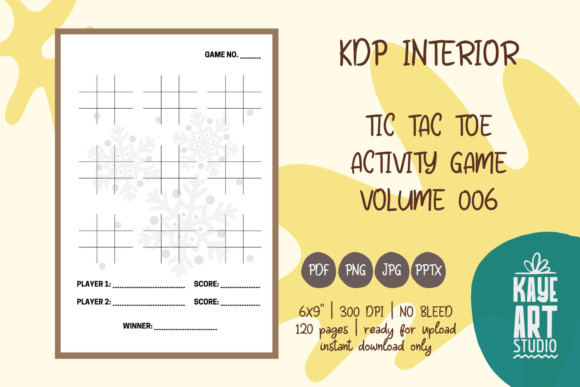
This specific interior boasts over 1000 tic tac toe games contained within 120 pages. At first glance, the math might seem dense, but this is intentional. In the activity book niche, perceived value is paramount. Customers often judge a book by its "cost per entertainment hour." By maximizing the number of games per page through efficient layout design, this interior offers immense value without inflating printing costs. A 120-page book sits in a sweet spot for KDP royalties and spine width visibility, while the high game count serves as a powerful marketing hook for your book description.
Trim Size and Bleed Settings
The 6×9 inch trim size is arguably the industry standard for trade paperbacks and activity books. It is portable enough for travel yet large enough to accommodate readable graphics and comfortable writing space. Crucially, this interior is configured with NO BLEED settings. For beginners, bleed can be a source of significant frustration and rejected manuscripts. No-bleed interiors keep all content safely within the margins, eliminating the risk of text or grids being trimmed off during the manufacturing process. This setting drastically reduces formatting errors and speeds up the approval timeline.
Resolution and File Integrity
Quality is non-negotiable in print-on-demand. This interior is rendered at 300 DPI (Dots Per Inch), which is the minimum resolution required for crisp, professional printing. Anything lower results in pixelated lines and blurry text, leading to negative reviews and returns. Furthermore, the availability of multiple file types—PNG, PDF, JPG, and PPTX—offers unprecedented flexibility. While PDF is the standard for direct upload, having PNG and JPG files allows you to create promotional mockups or social media content. The inclusion of PPTX files is particularly noteworthy, as it allows experienced publishers to edit, rearrange, or customize the grids before publishing, adding a layer of uniqueness to their final product.
Strategic Relevance in Modern Self-Publishing
Why should a publisher choose a pre-made interior like Vol. 14 rather than designing from scratch? The answer lies in efficiency and risk mitigation. Designing 120 pages of perfectly aligned grids with consistent margins requires hours of labor and advanced software skills. By utilizing a tested interior, publishers reclaim that time to focus on what actually drives sales: keyword research, cover design, and marketing.
Moreover, this listing explicitly states that the files have been tested on KDP. This is a massive advantage. KDP’s automated review system can be finicky, flagging documents for margin errors or font embedding issues even when they appear correct. Using a verified interior removes the guesswork and technical anxiety from the upload process. It transforms publishing from a technical hurdle into a creative business decision.
Clarifying Common Misunderstandings
Despite the clarity of product listings, new publishers often harbor misconceptions about low-content interiors. Addressing these is vital for long-term success.
- Misconception: "The interior includes the cover."
Reality: This listing is for the INTERIOR only. You must create or commission a separate cover. The cover is your primary sales tool and should never be an afterthought. Treat the interior and cover as two distinct products that must complement each other aesthetically. - Misconception: "I can just upload and get rich."
Reality: An interior is a foundation, not a guarantee. Market saturation means you must differentiate your book through niche targeting, superior cover design, and effective advertising. The interior ensures quality; your strategy ensures visibility. - Misconception: "All tic tac toe books are the same."
Reality: Layout variety, grid size, and page density differ significantly between volumes. Vol. 14’s specific configuration of over 1000 games in 120 pages targets a specific segment of buyers looking for high-density value, distinguishing it from larger-format books with fewer games.
Practical Applications Beyond Simple Play
Understanding the end-user helps publishers market these interiors more effectively. Tic tac toe is often dismissed as trivial, but its applications are diverse:
- Educational Development: Teachers and homeschoolers use these books to teach logic, pattern recognition, and strategic thinking in early learners. The repetitive nature reinforces cognitive pathways without feeling like work.
- Senior Cognitive Health: Activity books are increasingly recommended for seniors to maintain mental acuity. The simple rules and low-stress gameplay make tic tac toe ideal for memory care and rehabilitation settings.
- Travel and Waiting Rooms: Parents seek screen-free entertainment for children during travel or appointments. A 6×9 book with 1000+ games is a practical solution that fits in small bags and provides hours of engagement.
- Therapeutic Tools: Occupational therapists sometimes use grid-based games to assist with fine motor skills and hand-eye coordination, making these books functional tools beyond mere entertainment.
Building a Sustainable Publishing Workflow
Incorporating assets like the KDP Interior Tic Tac Toe Game Vol. 14 into your workflow is about building scalability. When you trust your interior files, you can publish faster and test more niches. The multi-format availability supports a holistic business approach: use the PDF for KDP, the PPTX for customization, and the PNGs for Amazon Ads or Pinterest marketing.
Furthermore, understanding the "No Bleed" specification teaches valuable lessons about print design constraints that apply across all future projects. It instills discipline in margin management and safe zone awareness, skills that transfer directly to high-content publishing should you choose to expand later.
Conclusion: Quality as a Competitive Advantage
The KDP Interior Tic Tac Toe Game Vol. 14 is more than a collection of grids; it is a professionally engineered component of a larger publishing strategy. By combining optimal trim size, verified no-bleed settings, high-resolution output, and substantial content volume, it addresses the core technical challenges that derail many new publishers. In an era where AI-generated content and low-effort uploads flood the marketplace, committing to tested, high-quality interiors is a signal of professionalism. Whether you are a seasoned publisher scaling your catalog or a beginner seeking a reliable starting point, understanding and leveraging these specialized resources is key to navigating the evolving landscape of self-publishing with confidence and competence.