Sheet Music Notebook for KDP: A Practical Resource for Publishers and Musicians
Creating a low-content book for Amazon KDP often feels like a race against time. You spot a trending niche, but by the time you design the interior, format the margins, and generate a cover, the opportunity has passed. This is where a pre-made Sheet Music Notebook for KDP changes the workflow entirely. Rather than staring at a blank canvas in Illustrator or Canva, you are starting with a professional-grade foundation that is technically compliant and ready for market. This resource is not just about saving an hour of design work; it is about eliminating the technical anxiety associated with publishing music-related journals.
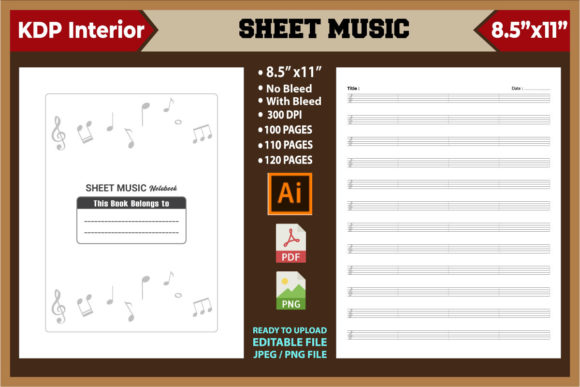
At its core, this Sheet Music Notebook for KDP is a comprehensive digital asset package designed specifically for self-publishers. It provides the structural backbone of a music journal without requiring you to be a graphic designer or a music theorist. The files come prepared in multiple formats, including high-resolution PDFs for immediate upload, JPEG and PNG files for cover creation or marketing mockups, and editable AI files for those who want to tweak the staff spacing or add branding. With dimensions set to the industry-standard 8.5 x 11 inches and options for 100, 110, or 120 pages, these notebooks fit seamlessly into the expectations of musicians and students alike.
When Speed and Technical Accuracy Matter Most
The most immediate application for this resource is during high-volume publishing periods or when testing new niches. If you are a KDP entrepreneur trying to determine whether "guitar tab notebooks" or "piano composition journals" perform better in your specific sub-niche, creating unique interiors for each test is inefficient. Using a standardized Sheet Music Notebook for KDP allows you to launch multiple variations rapidly. Because the files are available with both bleed and no-bleed settings, you avoid the common rejection notices from Amazon’s automated review system. The margins are pre-calculated, ensuring that the staves do not get cut off during printing or disappear into the gutter binding.
Consider the scenario of a freelance designer who manages several pen names. One account focuses on educational materials, while another targets hobbyist composers. The editable AI files allow this creator to maintain distinct visual identities across accounts while using the same reliable interior structure. They can adjust line weights, add logos to the corner of each page, or modify the header fonts to match their brand guidelines, all without rebuilding the musical staff from scratch. This flexibility turns a generic template into a proprietary product.
Educational Use Cases for Teachers and Tutors
Beyond commercial publishing, private music educators and homeschooling parents find immense practical value in these downloadable interiors. A piano teacher might need a custom assignment book that includes standard notation space alongside lined areas for practice notes. Instead of buying expensive, mass-produced journals that include irrelevant content, they can use the Sheet Music Notebook for KDP to create a tailored resource. By utilizing the editable files, they can insert their studio logo, add specific instructional text to the bottom of each page, or even include weekly practice trackers.
This customization extends to group classes as well. A choir director preparing for a semester might compile a 120-page workbook containing warm-up exercises on some pages and blank staves for dictation on others. Having access to individual PNG or JPEG elements means they can mix and match page types before compiling the final PDF. For educators selling resources on platforms like Teachers Pay Teachers or Etsy, this sheet music notebook serves as a base layer upon which they can build unique, copyright-safe educational products. The key here is transformation; the downloaded file is the raw material, not the final product.
Supporting Creative Workflows for Composers
Musicians and songwriters often have specific preferences for how they capture ideas. Some prefer wide staves for adding lyrics below, while others need narrow spacing to fit complex orchestral arrangements on a single page. The availability of different page counts (100, 110, 120) and editable source files addresses this variability. A composer working on film scores might opt for the 120-page version to accommodate longer sketches, whereas a songwriter capturing verse-chorus structures might prefer the lighter 100-page option for portability.
For creators who sell physical merchandise alongside their digital music, these notebooks offer a tangible product extension. An independent artist releasing a new album could bundle a branded composition journal with their vinyl or CD sales. Using the Sheet Music Notebook for KDP, they can quickly produce a limited-run paperback that features their album art on the cover and custom-branded interior pages. This creates an additional revenue stream and deepens fan engagement without requiring a massive print run or inventory investment. The print-on-demand model handles the logistics, while the downloadable assets handle the creative setup.
Key Considerations Before Downloading and Publishing
While the convenience of a ready-made Sheet Music Notebook for KDP is significant, users must approach it strategically to avoid market saturation. Simply uploading the stock PDF without modification is rarely a path to long-term success. Amazon’s algorithm favors unique content, and customers can spot generic templates. Before purchasing or downloading, consider how you will differentiate your edition. Will you add a reference chart for chord progressions? Will you include a glossary of musical terms in the front matter? Will you design a cover that targets a specific demographic, such as left-handed guitarists or early childhood music students?
Technical compatibility is another factor. Ensure your software can handle the provided AI files if you plan to customize them. Adobe Illustrator is the industry standard, but if you only have access to Affinity Designer or Inkscape, verify that the vector paths translate correctly. For those sticking to the non-editable PDF route, pay close attention to the bleed specifications. Even though the files are labeled correctly, always double-check your KDP dashboard settings. Selecting "No Bleed" for a file designed with bleed margins will result in white borders appearing where color should extend to the edge, ruining the professional appearance of the notebook.
- Verify Niche Demand: Use tools like Publisher Rocket or Helium 10 to confirm that there is search volume for the specific type of sheet music notebook you intend to create before downloading assets.
- Check Licensing Terms: Understand whether the license permits commercial distribution of the unmodified file or requires significant alteration. Respecting intellectual property protects your KDP account from suspension.
- Assess Print Quality Needs: Standard KDP paper is 55# (90 GSM). If your target audience uses heavy markers or fountain pens, acknowledge this limitation in your book description or suggest they use pencils, as the paper weight is determined by Amazon, not the interior file.
- Plan Your Cover Strategy: The interior gets the sale, but the cover gets the click. Ensure you have a plan for creating a wraparound cover that matches the 8.5 x 11 spine width calculated for your chosen page count.
Maximizing Value Through Strategic Customization
The true power of this Sheet Music Notebook for KDP lies in its role as a time-saving accelerator rather than a complete solution. Successful publishers treat these downloads as components in a larger assembly process. For example, a blogger writing about music theory might use the notebook as a lead magnet to build an email list. They can customize the first five pages with exclusive content, links to their courses, and QR codes to video tutorials. The remaining 115 pages serve as the functional utility that keeps the user engaged with the brand.
Similarly, marketers in the music education space can use these files to create sample packs. Offering a free 10-page excerpt derived from the full 120-page file builds trust and demonstrates quality. When users see that the staves are crisp, the margins are generous, and the layout is intuitive, they are more likely to purchase the full version or related premium products. This approach aligns with modern content marketing principles where value is demonstrated upfront.
Ultimately, whether you are a seasoned KDP publisher expanding your catalog, a music teacher seeking better classroom tools, or a creative entrepreneur building a brand, the Sheet Music Notebook for KDP offers a pragmatic starting point. It removes the friction of technical formatting, allowing you to focus on the aspects of publishing that actually drive sales: niche selection, cover design, keyword optimization, and audience connection. By leveraging these ready-to-upload assets responsibly and creatively, you transform a simple digital download into a sustainable business asset or a valuable personal tool.