Spending Tracker KDP Interior: Editable Template
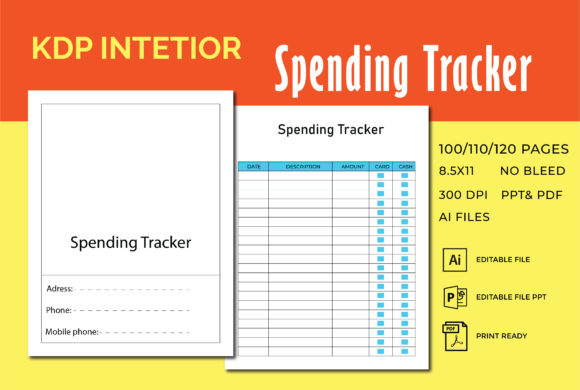
Creating a profitable low-content book on Amazon requires more than just a generic grid; it demands a user experience that solves a specific problem. The Spending Tracker KDP Interior is designed specifically for publishers who want to offer genuine utility to their customers while maintaining a streamlined production workflow. This 8.5″x11″ template serves as a comprehensive financial logbook, but its true value lies in its editable nature. Unlike static PDFs that lock you into a single design iteration, this asset provides fully editable AI and EPS files, allowing designers and entrepreneurs to customize the layout before generating a high-quality, 300 DPI print-ready PDF.
The visual personality of this interior strikes a deliberate balance between professional accounting tools and accessible personal journaling. It avoids the sterile, intimidating aesthetic of corporate ledgers while steering clear of the overly decorative styles that can hinder data entry. The typography relies on clean sans serif fonts for headers and functional tables, ensuring high readability at small point sizes. This modern typography approach reduces cognitive load, making the act of tracking expenses feel less like a chore and more like a manageable daily habit. For the end-user, this translates to higher engagement and better reviews, which are critical signals for Amazon’s algorithm.
Strategic Customization with Editable Source Files
The inclusion of editable AI and EPS files transforms this product from a simple template into a versatile design asset. For publishers building a brand identity around personal finance or budgeting, consistency is key. Having access to the vector source files allows you to adjust margins, modify column widths, or update header typography to match your existing portfolio. This level of control ensures that your Spending Tracker KDP Interior aligns perfectly with your cover design and overall series branding.
Consider the practical applications of this editability. A publisher targeting college students might simplify the expense categories and add a section for textbook costs, using a friendly handwritten font for accents to appeal to a younger demographic. Conversely, a creator focusing on small business owners might expand the tax deduction columns and utilize a premium serif font for headings to convey authority and trustworthiness. These micro-adjustments, made possible through vector editing software, allow you to test different niches without purchasing new templates for every variation. It also enables you to fix potential formatting issues instantly if KDP updates its margin requirements, protecting your long-term investment.
Typography and Layout Hierarchy in Financial Logging
In functional book design, typography is not merely decorative; it is structural. The Spending Tracker KDP Interior utilizes typeface choices that prioritize clarity over flair. When designing or modifying these interiors, understanding the role of font pairing is essential. The primary data entry areas typically use highly legible sans serif typefaces with open counters and generous x-heights. This ensures that even when users write quickly or print at home, the pre-printed text remains distinct from their handwriting.
Visual hierarchy guides the user through the page without needing instructions. Bold weights distinguish monthly summaries from daily logs, while lighter weights handle repetitive labels. If you choose to customize the template, resist the urge to use display fonts or script fonts within the data tables. While those creative fonts work beautifully for cover design or social media graphics, they fail in the context of repetitive data entry. Reserve stylized typography for section dividers or motivational quotes, keeping the functional areas strictly utilitarian. This restraint enhances the perceived professionalism of the book and improves the actual usability of the product.
Technical Specifications for Seamless KDP Upload
Navigating Kindle Direct Publishing specifications can be a friction point for many creators. This template eliminates guesswork by adhering to strict technical standards. The dimensions are set to the industry-standard 8.5×11 inches, providing ample writing space without exceeding standard shipping tiers. Crucially, the bleed settings are configured to "Bleed OFF." This is a vital distinction for spending trackers, as content must remain safely within the safe zone to prevent trimming errors during the print-on-demand process.
- Dimensions: 8.5 x 11 inches (US Letter), optimized for standard printing costs.
- Page Count Options: Available in 100, 110, and 120 pages to suit weekly, monthly, or annual tracking needs.
- Resolution: 300 DPI print-ready PDF ensures crisp lines and text, avoiding the blurriness associated with web-resolution files.
- Bleed Configuration: No Bleed setup keeps all elements within safe margins, reducing rejection risk.
- File Formats: Includes AI, EPS, and final PDF for maximum workflow flexibility.
For marketers and bloggers promoting these books, the 300 DPI resolution matters significantly for marketing materials. You can zoom into the interior pages for promotional social media graphics or website mockups without pixelation. High-fidelity previews build trust with potential buyers who want to verify the layout quality before purchasing. By starting with a professionally formatted file, you avoid the common pitfalls of amateur self-publishing, such as low-resolution artifacts or improper gutter margins that eat into writing space.
Evaluating Fit for Your Low-Content Portfolio
Before integrating this Spending Tracker KDP Interior into your catalog, assess how it complements your current offerings. Successful low-content publishing often relies on cross-promotion and series potential. Does this tracker pair well with an existing budget planner or debt payoff journal? The clean, neutral aesthetic makes it an excellent companion to various cover styles, from minimalist geometric designs to floral illustrations.
When testing font pairings or layout adjustments in the editable files, always print a physical proof. Screen rendering differs vastly from ink on paper. Check the line weight of the table borders; lines that look substantial on a retina display may disappear when printed via POD laser technology. Verify that the writing space between lines accommodates average handwriting size. These tactile considerations separate functional products from digital novelties. Furthermore, review the commercial licensing terms to ensure your intended use case, whether for direct KDP sales or as a lead magnet for a financial coaching business, is fully covered.
Ultimately, the success of a no-content or low-content book hinges on the intersection of design quality and user utility. This template provides the foundational structure necessary for both. By leveraging the editable source files, respecting typographic best practices, and adhering to technical print standards, publishers can create spending trackers that genuinely serve their audience. Whether you are a seasoned KDP veteran expanding your niche or a graphic designer entering the self-publishing space, this asset offers a reliable starting point that balances creative freedom with manufacturing precision.